
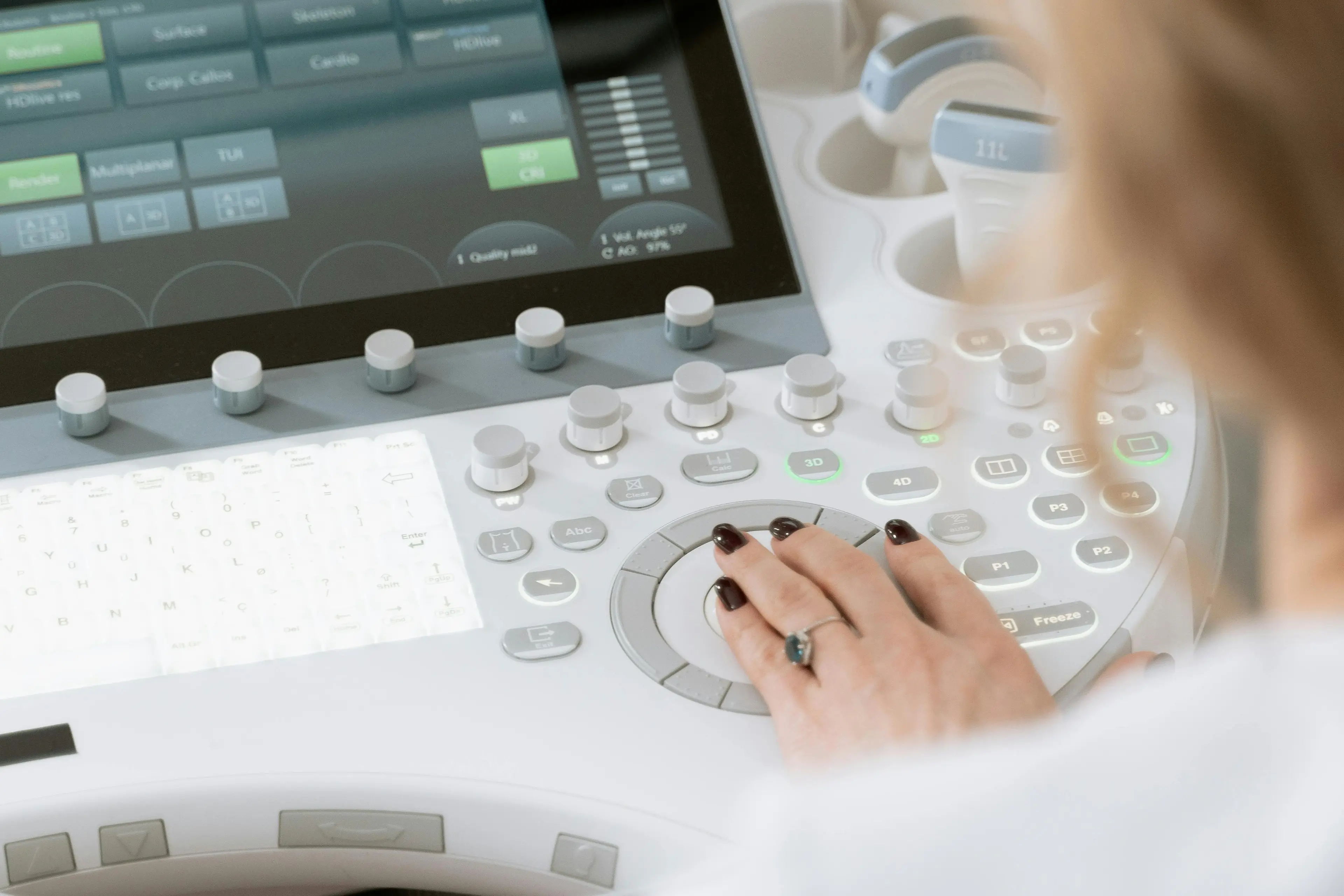
Speech Recognition in Hospitals
In healthcare, discussions about technology often focus on the future: artificial intelligence, automated diagnostics, and fully digital care pathways. Many of these solutions are still in development or used only in limited pilot projects. At the same time, one technology is already mature and widely usable in hospitals today: speech recognition.
Speech recognition, in its simplest form, means that a doctor or nurse speaks and the system converts that speech directly into text. When this happens in real time and with sufficient accuracy, it can significantly change how clinical documentation is created. Instead of typing long patient notes manually, clinicians can dictate them directly into the electronic health record.
The technology is no longer experimental. In many healthcare organizations, it is already part of everyday work. At the same time, it addresses one of the biggest operational challenges in modern healthcare: the amount of time spent on documentation.
The Invisible Work of Healthcare: Documentation
Healthcare professionals did not choose their profession to spend large parts of their day typing text into computers. Yet this is exactly what happens in many hospitals and clinics.
Various studies and operational analyses have shown that doctors may spend up to half of their working time on documentation and administrative tasks. This includes writing patient records, entering information into clinical systems, and preparing different types of reports.
When additional tasks such as care coordination, billing documentation, and reporting requirements are included, administrative work can take up even more time. In some environments, clinicians may spend nearly two hours on documentation and related tasks for every hour spent with patients.
This imbalance has become one of the key drivers of workload and stress in healthcare. Doctors and nurses often find themselves finishing documentation after their shifts or rushing between patient encounters in order to keep systems updated.
Documentation, however, cannot simply be removed. Accurate patient records are essential for continuity of care, patient safety, and legal compliance. The real challenge is not eliminating documentation but making it more efficient.
This is where speech recognition begins to transform the situation.
From Speech to Text in Real Time
The basic concept of speech recognition is straightforward: the system listens to a user’s speech and converts it into written text. Modern systems perform this process in real time, meaning the text appears on screen at the same moment the user is speaking.
The technology has developed rapidly in recent years. In the past, dictation often meant that a doctor recorded an audio file and someone else transcribed it later. This process could take hours or even days.
Modern speech recognition systems perform the same task instantly. A physician can dictate a patient report directly into the clinical information system, see the text appear immediately, and make any necessary corrections on the spot.
Advanced systems are also trained to understand medical terminology and clinical context. This reduces errors and makes documentation much smoother than it used to be.
On many medical specialties, speech recognition accuracy can reach around 96 to 98 percent, which makes it sufficiently reliable for daily clinical use.
When technology reaches this level of reliability, it stops being a novelty and becomes a practical tool.
Time Savings That Matter in Daily Work
One of the most significant impacts of speech recognition is the amount of time it can save.
Speaking is naturally faster than typing. When documentation can be created by dictation, clinicians can complete patient notes more quickly and move on to the next task.
User experiences from healthcare organizations show that speech recognition can save up to around 45 minutes of work time per day. Over the course of a year, this can translate into weeks of recovered working time.
The benefit is not only about replacing typing with speech. An equally important factor is that documentation can be completed immediately after the clinical encounter. When a doctor dictates the note right after seeing a patient, there is no need to revisit the case later in the day.
This reduces cognitive load and also improves accuracy. Details are still fresh in memory, which means the documentation is often more precise and complete.
Real-time documentation also improves the flow of information. When the note is finished immediately, other members of the care team can access it right away.
Better Ergonomics and Reduced Physical Strain
The impact of speech recognition is not limited to time savings. It can also significantly improve working conditions for healthcare professionals.
Continuous typing can cause neck and shoulder strain, especially during long clinical days. By replacing a portion of keyboard work with speech, physical strain can be reduced.
At the same time, dictation feels more natural for many clinicians. Doctors are used to explaining cases verbally to colleagues, students, and patients. Speech recognition leverages this natural way of communicating.
Many users report that dictation feels easier than writing, particularly when producing longer reports or detailed clinical descriptions. This makes documentation less physically demanding and mentally exhausting.
When the Technology Actually Works
Speech recognition has been tested in healthcare for decades, but only in recent years has it become truly practical.
The main reason is the rapid development of AI-based language models and acoustic recognition systems. Modern speech recognition engines can understand speech far more accurately than earlier generations.
They are also capable of handling interruptions and corrections naturally. If a clinician begins a sentence incorrectly and corrects it mid-phrase, the system can often interpret the intended result correctly.
In addition, many systems learn from the user’s voice patterns and specialty-specific vocabulary over time. This continuous learning improves recognition accuracy and overall usability.
Real Use in Hospital Environments
Speech recognition is no longer just a tool used by individual physicians experimenting with new technology. It is increasingly being adopted at an organizational level.
In laboratory and pathology services, for example, speech recognition is widely used for creating diagnostic reports and documentation. Pathologists often produce long and detailed reports, and dictation can significantly accelerate this work.
When speech recognition is implemented effectively, many clinicians begin using it for the majority of their documentation tasks. Once the workflow becomes familiar, the technology quickly becomes a normal part of daily work.
Large healthcare organizations have also started adopting speech recognition more broadly because it helps reduce documentation time and improves operational efficiency.
Less Administrative Burden, More Time for Patients
In healthcare, the goal of technology is not only efficiency but also better patient care.
One of the most important benefits of speech recognition is that it frees up time that clinicians can spend with patients. When documentation becomes faster and easier, doctors and nurses have more time to focus on clinical work.
Administrative burden is not just an inconvenience. It can also contribute to fatigue and increase the likelihood of mistakes. When clinicians are forced to manage large volumes of documentation under time pressure, the risk of errors grows.
Technologies that reduce administrative load can therefore contribute indirectly to improved patient safety.
Security and Trust
Any technology used in healthcare must meet strict requirements for data protection and security. Patient information is highly sensitive, and its handling is regulated by law in most countries.
Speech recognition solutions used in healthcare must therefore comply with strict data security standards. Modern systems are designed to handle medical data securely and operate within regulated environments.
Many solutions also ensure that all data processing takes place within controlled infrastructure, often within the same regulatory region as the healthcare provider. This helps organizations comply with privacy and data protection regulations.
Ease of deployment is another important factor. The most successful speech recognition solutions are designed to integrate smoothly into existing clinical workflows and systems without requiring complex implementation projects.
Technology That Is Already Everyday Reality
Speech recognition is sometimes still described as a technology of the future. In reality, it is already part of everyday work in many healthcare environments.
Doctors dictate patient records directly into clinical systems, pathologists produce diagnostic reports by speaking, and healthcare professionals create notes without relying entirely on keyboards.
The technology continues to evolve. In the future, speech recognition systems may do more than convert speech into text. They may help structure clinical information, suggest coding, or summarize patient histories automatically.
However, the most important transformation has already happened.
Speech recognition is no longer a concept or a pilot experiment.
It is a working tool.
When Technology Handles the Paperwork
Digital transformation in healthcare has often focused on large system upgrades and complex IT projects. Speech recognition represents a different type of innovation.
It does not replace doctors or nurses. It does not radically change clinical workflows. Instead, it removes one of the most persistent sources of friction in daily work: typing.
When technology handles the paperwork, healthcare professionals can focus on what matters most in their work. The patient.
That is why speech recognition stands out among healthcare technologies. It is not only a promise of the future, but a solution that is already possible today.

Tomi Väätäinen
Head of Sales, Inscripta
Contact us and our experts will tell you more.
Would you like to hear more about the benefits of speech recognition?
Inscripta’s speech recognition solution helps all healthcare professionals document faster and stress-free.